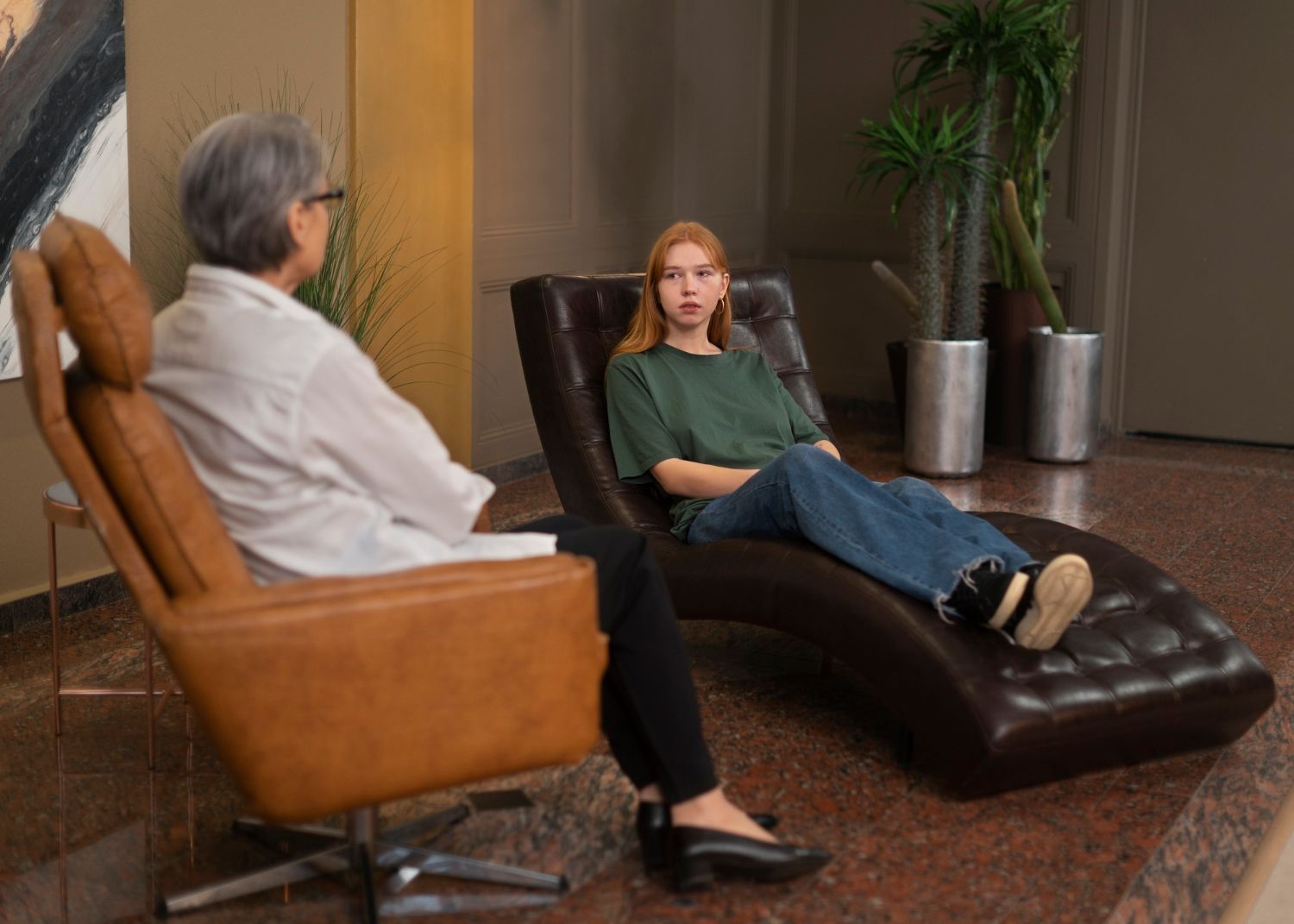
Everyone's Talking About "Dopamine Menus" But What Happens When Your Brain Doesn't Follow the Script?

If you've spent any time on TikTok or Instagram lately, you've probably seen the trend: colorful, aesthetically pleasing "dopamine menus" curated lists of feel-good activities people use to regulate their mood and motivation. Cold plunges. Journaling. Walking without a phone. It's a beautiful idea, and for a lot of people, it works.
But if you've tried building your own dopamine menu and found yourself staring at the list, unable to start a single item on it or starting all of them and finishing none, you might be living with something the wellness world rarely addresses with any real depth: ADHD.
The Gap Between "Knowing What Helps" and Actually Doing It
Here's what the dopamine menu trend gets right: the brain's reward system matters. Dopamine isn't just the "pleasure chemical"; it's deeply tied to motivation, task initiation, and follow-through. When it's working well, you can see a task, feel rewarded by the idea of completing it, and execute.
When it's not when there's a dysregulation in how the brain produces, releases, or receives dopamine the gap between intention and action can feel enormous. You know you should start. You want to start. And yet.
This is a lived experience for millions of adults, and it's one of the central features of ADHD that often goes unrecognized well into adulthood, especially in women, people of color, and high achievers who've developed sophisticated coping mechanisms along the way.
Why Los Angeles Is Having a Psychiatric Reckoning Right Now
There's something happening in Los Angeles right now. Between the burnout of creative industries, the lingering effects of pandemic-era isolation, and a cultural moment where people are increasingly willing to say "I think something is off with how my brain works," more adults are seeking answers than ever before.
Many of them come in having self-diagnosed from a TikTok video. Some of them are right. Some of them are dealing with anxiety, sleep disorders, or trauma responses that look a lot like ADHD. And some have been living with undiagnosed ADHD for decades, having been told they were "smart but lazy," "scattered," or "too sensitive."
Proper ADHD treatment in Los Angeles isn't just about confirming a heuristic from social media. It's about a thorough evaluation, understanding your full history, ruling out overlapping conditions, and building a treatment plan that reflects how you actually function, not a generalized checklist.
The Real Dopamine Dysregulation Conversation
What wellness content often misses is that ADHD-related dopamine dysregulation isn't a lifestyle problem, it's neurobiological. The dopamine menu can absolutely be a helpful tool alongside treatment, but for someone with untreated ADHD, suggesting they "just add more pleasurable activities" to manage their brain is a bit like suggesting someone with a broken leg "try walking more gently."
Effective ADHD treatment may include-
- Medication management stimulant and non-stimulant options, carefully titrated based on your individual neurochemistry and any co-occurring conditions.
- Cognitive behavioral therapy adapted for ADHD is not generic CBT, but approaches specifically designed for executive function challenges.
- Psychoeducation, understanding why your brain works the way it does, which is often the most liberating piece for adults who've spent years blaming themselves.
- Lifestyle support, yes, including things like movement, sleep, and structure, but in a way that's realistic for an ADHD brain, not a neurotypical one.
"But I've Functioned Fine Until Now"
This is one of the most common things I hear. And it makes sense, ADHD often doesn't fully reveal itself until the demands of life outpace the coping mechanisms you've built. A new job. Grad school. Parenthood. A city like Los Angeles, where stimulation is constant and the pressure to perform is relentless.
The scaffolding holds until it doesn't. And that moment of collapse when the strategies that worked for years suddenly stop working is often when people finally seek help.
It's not a failure. It's a signal.
What Getting Evaluated Actually Looks Like
A thorough psychiatric evaluation for ADHD in adults isn't a 15-minute appointment and a prescription. It involves understanding your developmental history, current symptoms across multiple life domains, sleep, mood, anxiety, and any substances you may be using to self-regulate (caffeine, alcohol, cannabis, all common ADHD self-management tools people don't always connect to the diagnosis).
It also involves honesty about what's working, what isn't, and what you actually want your life to look like. Because ADHD treatment isn't about making you into a different person. It's about removing the obstacles that are keeping you from being the person you already are.
If you've been scrolling wellness content, trying every routine, and still feeling like your brain is running a different operating system than everyone else's, that feeling deserves more than another productivity hack.
Dr. Viviana Suaya, MD is a psychiatrist offering comprehensive evaluations and individualized ADHD treatment in Los Angeles for adults who are ready to understand their brain, not just manage it.